Introduction: The Humble Origins of Japan’s Kei Trucks
Long before kei trucks became a global curiosity among JDM enthusiasts, they were simply hardworking vehicles used by families, farmers, and small businesses across Japan. One of the early examples that helped define this category is the Suzuki Carry L50.
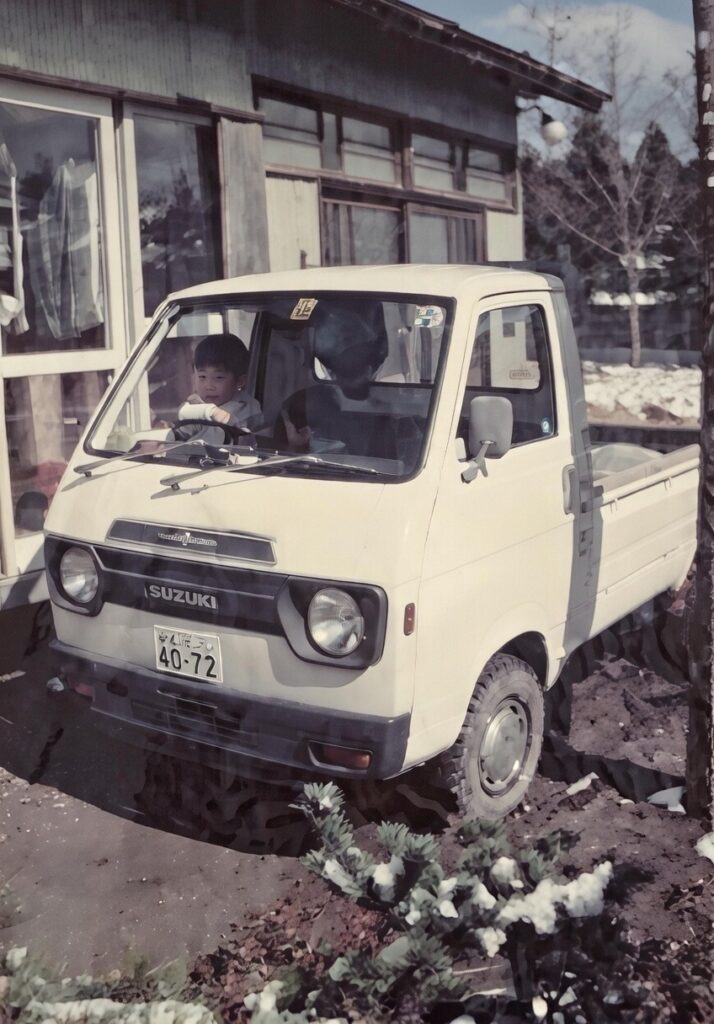
For many Japanese families, these compact trucks were more than just work vehicles—they were part of everyday life. The photograph above captures a moment from that era: a Suzuki Carry L50 parked in front of a traditional home, with two children sitting inside the cab. Scenes like this were common throughout rural Japan in the 1970s and 1980s.
Today, vehicles like the Suzuki Carry L50 have become fascinating pieces of automotive history for people interested in Japanese kei cars and classic utility vehicles.
What Is the Suzuki Carry L50?
The Suzuki Carry L50 is part of the early generations of the Suzuki Carry kei truck lineup. Built during the development years of Japan’s kei vehicle regulations, it was designed to be extremely compact while still offering practical cargo capacity.
Typical Characteristics
- Engine: small-displacement two-stroke engine
- Layout: compact cab-over design
- Drive: rear-wheel drive
- Purpose: light commercial transport and farm work
Despite its small size, the Carry L50 could haul tools, crops, and supplies in tight spaces where larger trucks would struggle.
Why Early Kei Trucks Like the L50 Are Special
1. Pure Simplicity
Vehicles like the Suzuki Carry L50 represent an era when automotive engineering focused on practicality. Minimal electronics, lightweight construction, and simple mechanical systems made these trucks easy to repair and maintain.
2. Designed for Narrow Japanese Roads
Japan’s rural villages and old towns often have extremely narrow streets. Kei trucks were engineered specifically to navigate these environments while still providing useful cargo space.
3. Cultural Icons of Rural Japan
For decades, trucks like the Carry were everywhere in the Japanese countryside. They were used by:
- Farmers
- Small shop owners
- Construction workers
- Local delivery services
Because of this, many Japanese people associate these vehicles with childhood memories and everyday rural life.
A Personal Connection to the Suzuki Carry
For me, this truck is more than just a classic kei vehicle.
The Suzuki Carry L50 in the photograph was once owned by my family. The two children sitting inside the cab are my younger brother and me when we were kids. At the time, it was simply the small truck our family used in daily life.
Looking back now, it feels like a snapshot of a different era in Japan—when vehicles like this were common sights in front of houses, farms, and small workshops.
Why Enthusiasts Around the World Are Discovering Kei Trucks
In recent years, interest in classic Japanese kei vehicles has grown internationally. Enthusiasts appreciate them for several reasons:
- Unique Japanese automotive culture
- Compact and lightweight design
- Mechanical simplicity
- Distinctive vintage styling
Older kei trucks like the Suzuki Carry are especially interesting because they show how Japan solved transportation challenges with extremely efficient engineering.
The Legacy of the Suzuki Carry
Today, the Suzuki Carry continues to be produced in modern form, but early models like the L50 represent the roots of the kei truck concept.
They remind us that vehicles do not have to be large or powerful to be meaningful. Sometimes the smallest machines carry the biggest stories.
Final Thoughts
The Suzuki Carry L50 is not just a small utility truck—it is a piece of everyday Japanese history. For people interested in kei cars, classic Japanese vehicles, or rural life in Japan, trucks like this provide a glimpse into a practical and humble automotive culture.
And for those who grew up around them, they are also reminders of childhood memories that remain long after the trucks themselves disappear from the road.
Leave a Reply